


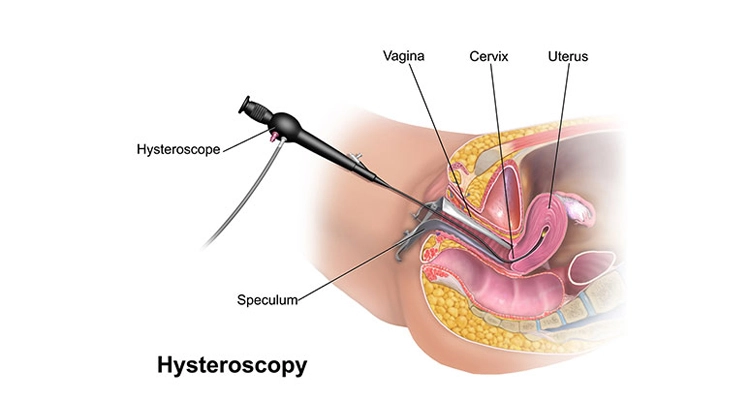
A healthy uterus is essential for successful conception and pregnancy. Conditions such as uterine polyps, fibroids, adhesions, or congenital abnormalities can interfere with implantation and increase the risk of miscarriage. Diagnostic and Operative Hysteroscopy is a minimally invasive procedure that allows fertility specialists to examine the inside of the uterus and, when necessary, treat abnormalities during the same procedure.
At Anmol Fertility Center, Jaipur, Dr. Sapna Basandani offers advanced hysteroscopy services using state-of-the-art equipment to diagnose and treat uterine conditions, helping improve fertility outcomes and overall reproductive health.
Diagnostic Hysteroscopy is a minimally invasive procedure used to examine the inside of the uterus (uterine cavity) using a thin, lighted telescope called a hysteroscope. The hysteroscope is gently inserted through the cervix, allowing the fertility specialist to directly visualize the uterine cavity without making any abdominal incisions.
Diagnostic hysteroscopy helps identify conditions that may affect fertility, implantation, menstrual health, or recurrent pregnancy loss.
Operative Hysteroscopy is performed when an abnormality is identified during diagnostic evaluation or imaging. Specialized surgical instruments are passed through the hysteroscope to remove or correct uterine abnormalities without the need for open surgery.
This minimally invasive approach allows diagnosis and treatment to be completed in a single procedure in many cases.
Your fertility specialist may recommend hysteroscopy if you have:
Operative hysteroscopy can effectively diagnose and treat:
Removal of endometrial polyps that may interfere with implantation.
Removal of fibroids located inside the uterine cavity that can affect fertility and menstrual health.
Correction of congenital uterine abnormalities that may contribute to infertility or recurrent miscarriage.
Removal of scar tissue to restore the normal shape and function of the uterine cavity.
Removal of retained pregnancy tissue after miscarriage or delivery when clinically indicated.
Provides a direct view of the uterine cavity for precise diagnosis.
No abdominal incisions, resulting in less pain and faster recovery.
Many uterine abnormalities can be treated during the same procedure.
Correcting uterine abnormalities may improve implantation and pregnancy outcomes in selected patients.
Most women return to normal activities within a short period after the procedure.
Dr. Sapna Basandani reviews your medical history, fertility investigations, and ultrasound findings.
The procedure is usually performed as a day-care treatment under local, regional, or general anesthesia, depending on the indication.
A thin hysteroscope is gently inserted through the cervix into the uterus.
The uterine cavity is carefully examined for any abnormalities.
If required, specialized instruments are used to remove polyps, fibroids, adhesions, or other abnormalities during the same procedure.
Recovery is generally quick because no abdominal incisions are required.
Patients may experience:
Your doctor will provide personalized post-procedure instructions.
Dr. Sapna Basandani offers personalized infertility evaluation and minimally invasive gynecological procedures tailored to each patient’s needs.
Modern hysteroscopic equipment enables accurate diagnosis and effective treatment with enhanced patient comfort.
Our services include fertility assessment, IUI, IVF, ICSI, embryo freezing, egg freezing, recurrent pregnancy loss management, and minimally invasive fertility surgery.
Every patient receives individualized care, transparent guidance, and compassionate support throughout the fertility journey.
The procedure is generally well tolerated. Depending on the type of hysteroscopy, anesthesia or pain relief may be used to ensure patient comfort.
Diagnostic hysteroscopy usually takes 10–30 minutes. Operative hysteroscopy may take longer depending on the complexity of the treatment.
Most hysteroscopy procedures are performed as day-care procedures, allowing patients to return home the same day.
If infertility is caused by treatable uterine abnormalities such as polyps, fibroids, adhesions, or a uterine septum, hysteroscopic treatment may improve fertility outcomes.