
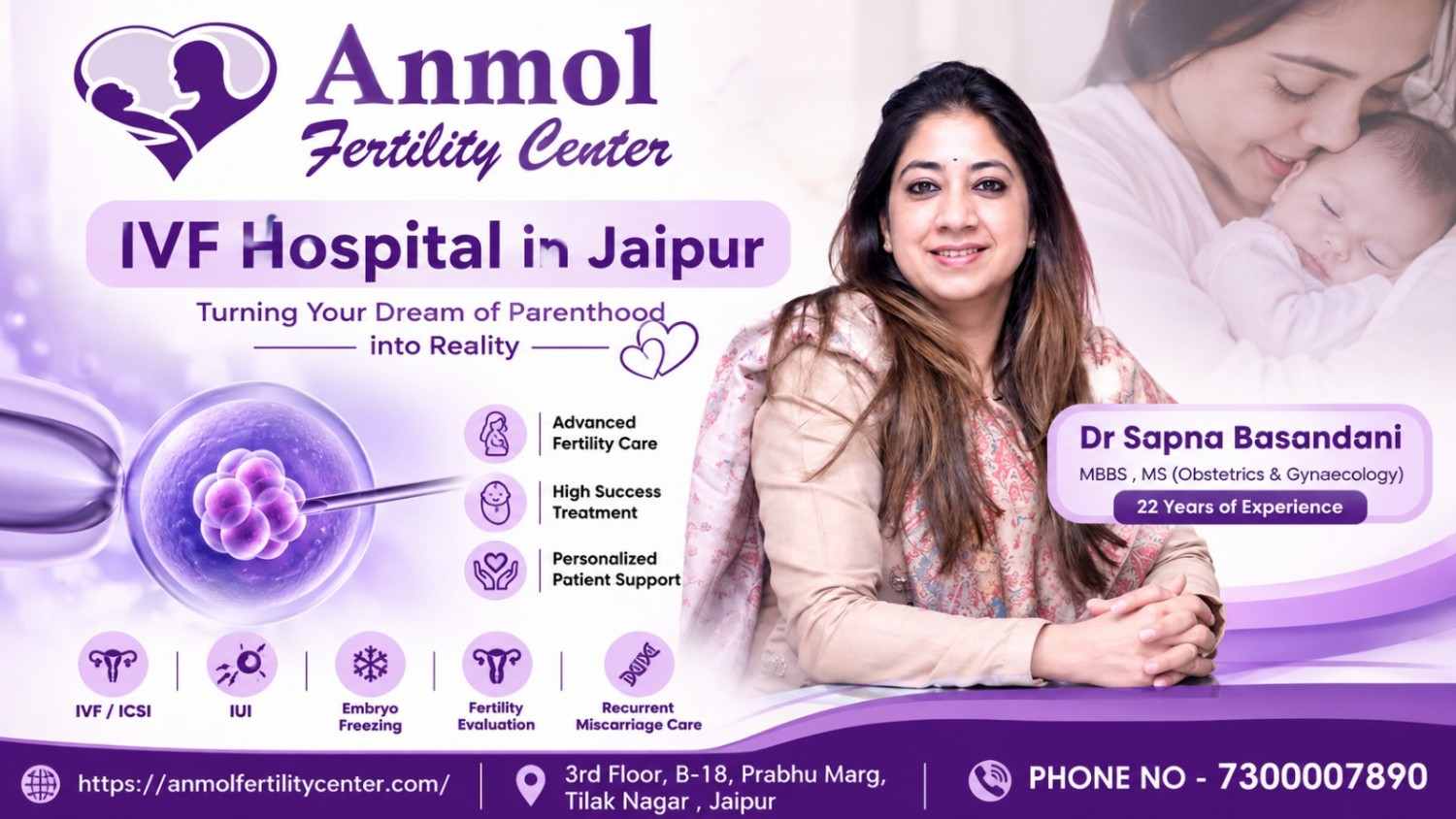
Choosing an IVF Hospital in Jaipur is an important decision for couples and individuals who are planning fertility treatment. The fertility journey can involve several stages, including diagnosis, ovarian stimulation, egg retrieval, fertilization, embryo development, embryo transfer, and follow-up. Therefore, selecting a fertility center that provides proper evaluation, personalized treatment planning, and clear communication can help patients better understand each step.
At Anmol Fertility Center, Dr. Sapna Basandani evaluates fertility concerns based on medical history, reproductive health, age, previous treatment, and relevant investigations. Since infertility can have different causes, the treatment plan should address each patient’s individual circumstances rather than follow the same approach for everyone.
Why Choosing the Right IVF Hospital in Jaipur Matters
IVF treatment requires coordination between fertility specialists, embryology professionals, clinical staff, and patients. Consequently, the quality of medical evaluation, laboratory practices, treatment planning, and communication can influence the overall treatment experience.
When comparing fertility centers, consider:
- Qualifications and experience of the fertility specialist
- Detailed fertility evaluation before treatment
- Availability of IVF and other fertility treatments
- Individualized treatment protocols
- Embryology laboratory standards
- Regular monitoring during treatment
- Clear explanation of procedures
- Transparent information about treatment costs
- Patient privacy and confidentiality
- Appropriate follow-up care
Most importantly, a fertility center should recommend IVF only when clinical evaluation supports its use.
1. Begin With a Detailed Fertility Evaluation
Before starting IVF, the fertility specialist should investigate possible reasons for difficulty conceiving. Not every patient experiencing infertility needs IVF as the first treatment.
Depending on individual circumstances, fertility evaluation may include:
- Medical and reproductive history
- Menstrual cycle assessment
- Ovulation evaluation
- Ovarian reserve testing
- Hormonal investigations
- Ultrasound examination
- Semen analysis
- Assessment of the uterus or fallopian tubes when indicated
- Review of previous fertility treatments
After reviewing the findings, the fertility specialist can recommend appropriate next steps. Some patients may benefit from ovulation management or IUI, whereas others may need IVF, ICSI, or another assisted reproductive treatment.
2. Consider the Fertility Specialist’s Experience
The fertility specialist plays a central role throughout treatment. From interpreting investigations and planning ovarian stimulation to monitoring the cycle and determining the next steps, several important decisions require individualized medical judgment.
About Dr. Sapna Basandani
At Anmol Fertility Center, Dr. Sapna Basandani provides fertility and reproductive care for individuals and couples facing difficulties with conception. She holds MBBS and MS in Obstetrics & Gynaecology qualifications and has extensive clinical experience in women’s health and fertility care.
Her approach begins with identifying factors that may affect fertility. Dr. Sapna Basandani considers age, ovarian reserve, hormonal findings, reproductive history, semen parameters, previous treatment, and other clinical factors before discussing suitable fertility options.
This individualized approach matters because patients with similar fertility concerns may still require different treatment strategies.
3. Check the Range of Fertility Treatments
When selecting an IVF Hospital in Jaipur, check whether the center offers different fertility treatments based on individual requirements.
Depending on the diagnosis, treatment options may include:
- Fertility evaluation and ovulation monitoring
- IUI (Intrauterine Insemination)
- IVF-ET (In Vitro Fertilization and Embryo Transfer)
- ICSI (Intracytoplasmic Sperm Injection)
- Frozen Embryo Transfer (FET)
- Embryo cryopreservation
- Egg or oocyte freezing
- Semen freezing
- Assisted hatching in selected cases
- Fertility preservation
- Recurrent implantation failure evaluation
- Recurrent pregnancy loss evaluation
- Hysteroscopy or laparoscopy when clinically indicated
A wider range of treatments allows the specialist to select an approach according to the diagnosis instead of recommending the same procedure to every patient.
4. Understand How IVF Treatment Works
Understanding the IVF process before treatment can help patients prepare for the different stages involved.
Ovarian Stimulation
The patient receives fertility medications to stimulate the ovaries and encourage multiple follicles to develop. The fertility team monitors follicular growth through ultrasound scans and other tests when required.
Egg Retrieval
Once the follicles reach an appropriate stage, the doctor schedules egg retrieval. The clinical team collects mature eggs from the ovaries through a medically supervised procedure.
Fertilization and Embryo Development
The embryology team combines the retrieved eggs with sperm under controlled laboratory conditions. Depending on clinical requirements, conventional IVF or ICSI may form part of the treatment plan.
After fertilization, the laboratory monitors embryo development.
Embryo Transfer
The fertility specialist transfers a selected embryo into the uterus at an appropriate stage. In some situations, the team may freeze embryos and plan a Frozen Embryo Transfer during a later cycle.
Pregnancy Testing
After the recommended waiting period, the fertility team conducts an appropriate test to determine whether pregnancy has occurred.
5. Look for Personalized IVF Protocols
Every patient’s fertility profile differs. Therefore, IVF treatment should reflect individual medical requirements.
A personalized protocol may consider:
- Age
- Ovarian reserve
- Hormonal profile
- Cause of infertility
- Duration of infertility
- Semen parameters
- Previous IVF attempts
- Previous response to medications
- Uterine health
- Other medical conditions
For example, a patient with reduced ovarian reserve may require a different approach from someone with PCOS or unexplained infertility. Personalized treatment planning helps the specialist adapt the protocol to the patient’s clinical needs.
6. Consider Embryology Laboratory Standards
The embryology laboratory plays an essential role in IVF because fertilization and early embryo development occur under carefully controlled conditions.
When choosing a fertility center, consider whether it follows appropriate procedures for:
- Egg and sperm handling
- Fertilization
- Embryo culture
- Embryo identification
- Cryopreservation
- Documentation
- Quality control
- Storage of reproductive material
The center should also provide clear information about procedures involving eggs, sperm, and embryos so patients understand what happens during laboratory stages.
7. Understand IVF Success Rates Realistically
Success rates often attract attention when patients compare fertility centers. However, no fertility center can guarantee pregnancy or a live birth from IVF.
Several factors can influence IVF outcomes, including:
- Female age
- Ovarian reserve
- Egg quality
- Sperm quality
- Embryo development
- Cause of infertility
- Uterine factors
- Previous reproductive history
Additionally, clinics may calculate and report success rates differently. Therefore, patients should avoid choosing a center solely because it advertises a high percentage.
Instead, ask the fertility specialist to explain the factors that may influence your individual treatment outcome.
8. Check Treatment and Cost Transparency
A reliable IVF Hospital in Jaipur should clearly explain the proposed treatment before the cycle begins.
Patients should understand:
- Tests required before treatment
- Recommended IVF protocol
- Medication requirements
- Monitoring schedule
- Procedures included
- Possible additional laboratory techniques
- Embryo freezing and storage costs, when applicable
- Follow-up requirements
Clear information can help patients make informed medical and financial decisions without unnecessary confusion during treatment.
9. Consider Communication and Patient Support
Fertility treatment may involve repeated appointments, medical procedures, waiting periods, and uncertainty. Therefore, communication with the fertility team remains an important part of the overall experience.
A supportive fertility center should:
- Explain procedures in understandable language
- Answer relevant patient questions
- Respect privacy and confidentiality
- Discuss realistic expectations
- Avoid guaranteed-result claims
- Explain alternatives when appropriate
- Provide clear instructions throughout treatment
Patients should feel comfortable discussing their concerns and understanding why the specialist recommends each step.
Fertility Care at Anmol Fertility Center
At Anmol Fertility Center, Dr. Sapna Basandani provides fertility evaluation and treatment planning according to individual reproductive needs. The process begins with understanding medical and reproductive history, evaluating relevant investigations, and identifying possible factors affecting conception.
Depending on the findings, patients may discuss IUI, IVF, ICSI, Frozen Embryo Transfer, fertility preservation, embryo cryopreservation, and other fertility treatments where clinically appropriate.
The objective is to help patients understand their fertility condition, available treatment options, and realistic expectations before proceeding with treatment.
Conclusion
Choosing the right IVF Hospital in Jaipur requires more than comparing packages or advertised success rates. Consider the fertility specialist’s experience, diagnostic approach, personalized protocols, embryology laboratory standards, available treatments, communication, transparency, and follow-up care.
At Anmol Fertility Center, patients can consult Dr. Sapna Basandani for fertility evaluation and individualized treatment planning. A thorough consultation can help identify possible causes of infertility and determine which treatment options may suit the patient’s reproductive needs.
Because IVF outcomes differ between individuals, realistic expectations remain essential. Choosing a fertility center that prioritizes diagnosis, evidence-based treatment planning, and clear communication can help patients make informed decisions throughout their fertility journey.
Frequently Asked Questions
1. How do I choose the right IVF Hospital in Jaipur?
Look for an IVF center that provides detailed fertility evaluation, individualized treatment protocols, appropriate embryology facilities, transparent cost information, realistic discussions about outcomes, and regular monitoring. The fertility specialist should recommend treatment according to your diagnosis rather than following the same protocol for every patient.
2. Does every couple with infertility need IVF treatment?
No. Treatment depends on age, fertility diagnosis, ovarian reserve, semen parameters, reproductive history, and other clinical factors. Some patients may benefit from ovulation management or IUI, while others may require IVF, ICSI, or another assisted reproductive treatment.
3. What factors affect IVF success?
Age, ovarian reserve, egg and sperm quality, embryo development, uterine health, underlying fertility conditions, and previous reproductive history can influence IVF outcomes. A fertility evaluation helps the specialist provide a more individualized understanding of expected outcomes.