


Advanced In Vitro Fertilization & Embryo Transfer (IVF-ET) by Dr. Sapna Basandani
Begin Your Journey to Parenthood with IVF-ET at Anmol Fertility Center
Infertility can be a challenging experience, but advancements in reproductive medicine have made parenthood possible for many couples. In Vitro Fertilization and Embryo Transfer (IVF-ET) is one of the most effective Assisted Reproductive Technology (ART) treatments for couples facing infertility. It involves fertilizing eggs with sperm in a specialized laboratory and transferring the resulting embryo into the uterus to achieve pregnancy.
At Anmol Fertility Center, Jaipur, Dr. Sapna Basandani offers personalized IVF-ET treatment in Jaipur using advanced fertility technology, a modern embryology laboratory, and compassionate patient care to maximize the chances of a successful pregnancy.
What is IVF-ET?
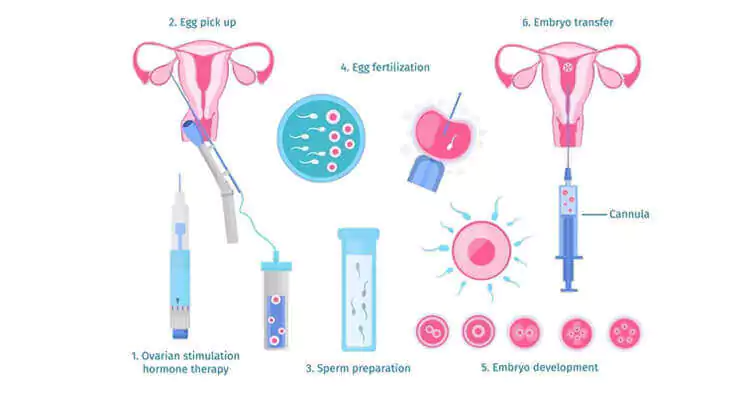
IVF-ET (In Vitro Fertilization and Embryo Transfer) is a fertility treatment in which mature eggs are collected from the ovaries and fertilized with sperm in a laboratory. The fertilized eggs develop into embryos under carefully controlled conditions. One or more healthy embryos are then transferred into the uterus, where implantation and pregnancy may occur.
IVF-ET has helped millions of couples worldwide achieve their dream of becoming parents.
Who May Benefit from IVF-ET?
IVF-ET may be recommended for couples experiencing:
A comprehensive fertility evaluation helps determine whether IVF-ET is the most appropriate treatment.
Benefits of IVF-ET Treatment
Advanced Fertility Treatment
IVF-ET is one of the most effective assisted reproductive techniques available for treating many causes of infertility.
Personalized Treatment Plan
Every IVF cycle is tailored according to the patient’s age, medical history, ovarian reserve, and fertility diagnosis.
Modern Embryology Laboratory
Embryos are cultured in a highly controlled laboratory environment using advanced reproductive technology.
Access to Advanced Fertility Techniques
IVF-ET can be combined with:
Comprehensive Fertility Care
Patients receive continuous support from consultation through pregnancy testing and follow-up care.
The IVF-ET Treatment Process
Step 1: Fertility Assessment
Dr. Sapna Basandani conducts a complete fertility evaluation, including hormonal testing, ultrasound, semen analysis, and other investigations.
Step 2: Ovarian Stimulation
Fertility medications are prescribed to stimulate the ovaries to produce multiple mature eggs.
Step 3: Follicular Monitoring
Ultrasound scans and hormone assessments monitor follicle growth and determine the optimal time for egg retrieval.
Step 4: Egg Retrieval (Ovum Pick-Up)
Mature eggs are collected using a minimally invasive ultrasound-guided procedure under sedation.
Step 5: Fertilization
The eggs are fertilized with sperm using conventional IVF or ICSI, depending on the couple’s fertility condition.
Step 6: Embryo Culture
The embryos are cultured in the laboratory for several days, often until the blastocyst stage, allowing embryologists to assess their development.
Step 7: Embryo Transfer (ET)
One or more healthy embryos are gently transferred into the uterus using a soft catheter. The procedure is simple, does not usually require anesthesia, and patients can return home the same day.
Step 8: Pregnancy Test
A blood pregnancy test is usually performed 10–14 days after embryo transfer to determine whether implantation has occurred.
Why Choose IVF-ET Treatment in Jaipur?
IVF-ET may be an effective option for couples who:
Your fertility specialist will recommend IVF-ET only after a detailed assessment of your reproductive health.
Why Choose Dr. Sapna Basandani?
Experienced Fertility Specialist
Dr. Sapna Basandani provides evidence-based fertility care with individualized treatment plans designed for each patient’s unique needs.
Advanced IVF Laboratory
Our state-of-the-art embryology laboratory supports embryo culture, vitrification, embryo freezing, ICSI, and advanced reproductive technologies.
Comprehensive Fertility Services
At Anmol Fertility Center, we provide:
Compassionate & Personalized Care
We understand that every fertility journey is unique. Our team is committed to providing emotional support, transparent communication, and personalized care throughout your treatment.
Frequently Asked Questions
What is the difference between IVF and IVF-ET?
IVF refers to the process of fertilizing eggs with sperm in the laboratory. IVF-ET includes both the IVF process and the Embryo Transfer (ET) procedure, where the embryo is placed into the uterus.
Is IVF-ET painful?
Egg retrieval is performed under sedation or anesthesia, while embryo transfer is generally painless and does not usually require anesthesia.
How many embryos are transferred?
The number of embryos transferred depends on factors such as the patient’s age, embryo quality, medical history, and current clinical guidelines. Your doctor will recommend the most appropriate approach.
What is the success rate of IVF-ET?
Success depends on several factors, including maternal age, egg quality, sperm quality, embryo quality, uterine health, and the underlying cause of infertility. Dr. Sapna Basandani will discuss the expected outcomes based on your individual case.
Can extra embryos be frozen?
Yes. Suitable embryos that are not transferred may be cryopreserved for future Frozen Embryo Transfer (FET) cycles if clinically appropriate.
Book Your Consultation Today
If you are planning fertility treatment or have been struggling to conceive, IVF-ET may provide the opportunity to build the family you have always dreamed of.
Consult Dr. Sapna Basandani at Anmol Fertility Center, for advanced IVF-ET treatment in Jaipur, comprehensive fertility evaluation, and compassionate reproductive care tailored to your unique journey.