


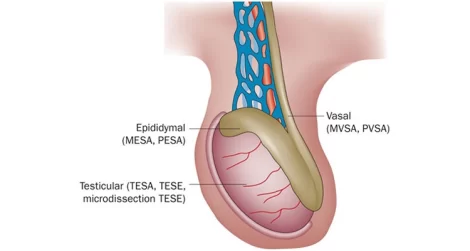
PESA/ TESA
Male Infertility Treatment with TESA & PESA – Advanced Solutions for Parenthood
Male infertility is a growing concern worldwide and contributes to nearly 40–50% of infertility cases among couples. While infertility is often assumed to be a female-related issue, medical science has clearly shown that male reproductive health plays an equally important role in conception. Factors such as low sperm count, poor sperm motility, abnormal sperm morphology, ejaculation disorders, and blockages in the reproductive tract can prevent successful fertilization, even after regular unprotected intercourse.
At advanced fertility centers, modern techniques like TESA (Testicular Sperm Aspiration) and PESA (Percutaneous Epididymal Sperm Aspiration) have revolutionized the treatment of male infertility, offering hope to men who were once considered incapable of fathering a child.
What is TESA and PESA? – Advanced Male Infertility Treatments Explained
TESA and PESA are advanced medical procedures used in the treatment of male infertility, especially for men who are unable to produce sperm in their semen due to medical conditions such as azoospermia, blockage of sperm ducts, or previous vasectomy. With modern assisted reproductive technology (ART), these procedures have made biological fatherhood possible for many couples struggling to conceive naturally.
What is TESA (Testicular Sperm Aspiration)?
TESA stands for Testicular Sperm Aspiration. It is a minimally invasive sperm retrieval technique in which sperm are directly extracted from the testicles using a fine needle. This procedure is commonly recommended for men with severe male infertility or conditions where sperm production is very low or absent in semen.
When is TESA required?
-
Azoospermia (no sperm in semen)
-
Non-obstructive azoospermia
-
Obstructive azoospermia
-
Very low sperm count
-
Previous failed sperm retrieval
-
Severe male factor infertility
How is TESA performed?
TESA is performed under local anesthesia. A thin needle is inserted into the testicle, and small tissue samples are aspirated. These samples are then examined in the IVF laboratory, where viable sperm are identified and prepared for fertilization. The retrieved sperm are typically used for IVF with ICSI (Intracytoplasmic Sperm Injection) or can be frozen for future IVF cycles.
Benefits of TESA
-
Minimally invasive procedure
-
Quick recovery
-
No surgical incision
-
Useful in complex infertility cases
-
High success rates when combined with IVF-ICSI
What is PESA (Percutaneous Epididymal Sperm Aspiration)?
PESA stands for Percutaneous Epididymal Sperm Aspiration. This procedure is mainly used in cases of obstructive azoospermia, where sperm production is normal but blocked from reaching the semen.
When is PESA recommended?
-
Blockage in the vas deferens
-
Previous vasectomy
-
Congenital absence of vas deferens
-
Normal sperm production with ejaculation blockage
How is PESA performed?
In PESA, a fine needle is inserted into the epididymis, the tube where sperm mature and are stored. Sperm-rich fluid is aspirated and processed in the laboratory. Like TESA, PESA-retrieved sperm are used in IVF or ICSI treatment.
Benefits of PESA
-
Less invasive than surgical sperm retrieval
-
High success rate in obstructive cases
-
Faster procedure and recovery
-
No stitches required
Difference Between TESA and PESA
The choice between TESA and PESA depends on the cause of male infertility. PESA is preferred when sperm production is normal but blocked, while TESA is used when sperm production is low or uncertain. A fertility specialist determines the best approach after detailed evaluation.
Role of TESA and PESA in IVF Treatment
Both TESA and PESA play a crucial role in IVF treatment for male infertility. The retrieved sperm are used in ICSI, where a single sperm is injected directly into the egg, significantly improving fertilization and pregnancy rates.