
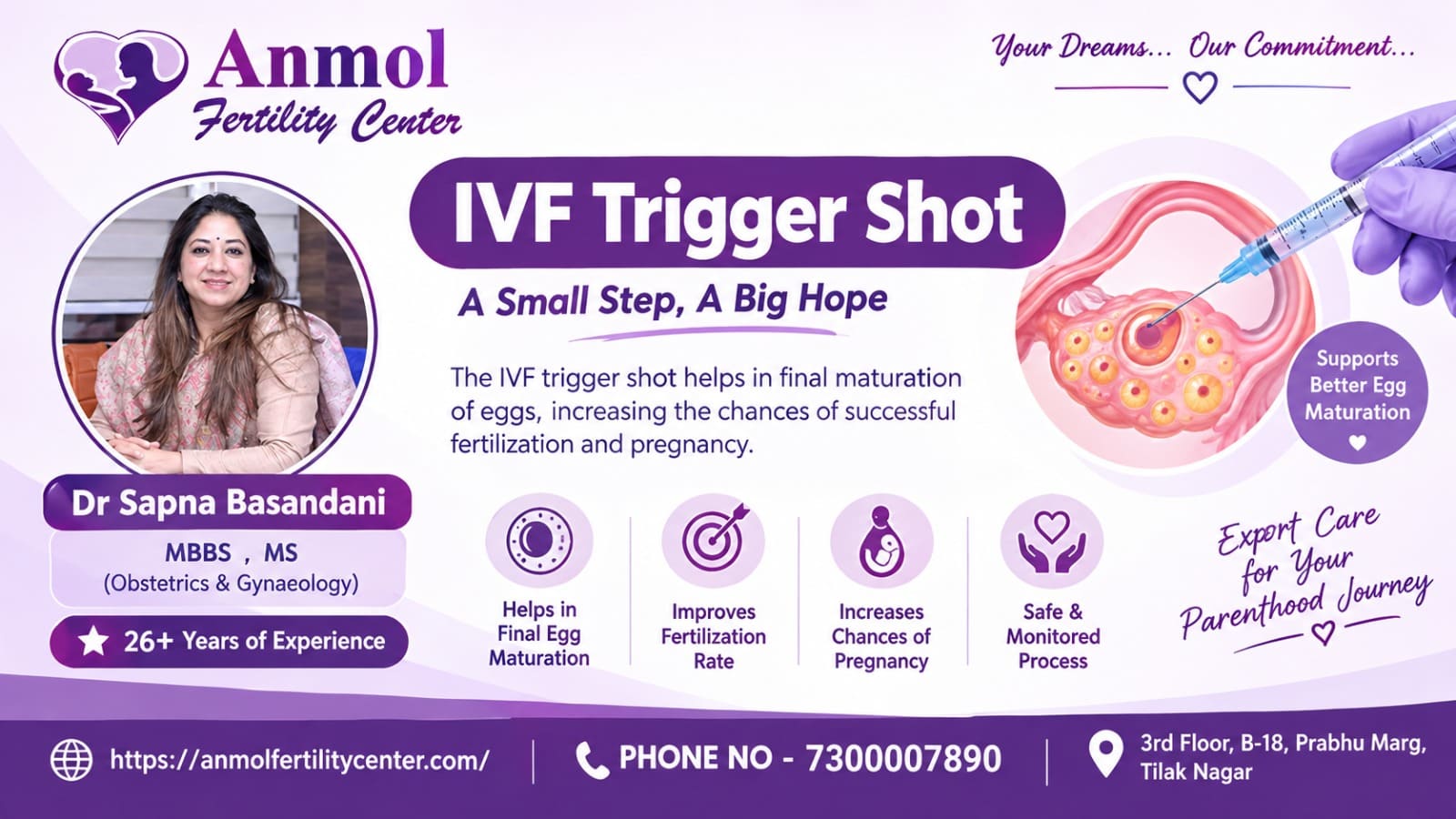
IVF treatment involves several carefully timed steps to help mature eggs develop and prepare for egg retrieval. One of the important steps in many IVF cycles is the trigger shot. This injection is given at a specific time to help complete the final maturation of the eggs and coordinate egg retrieval.
Understanding what is trigger injection in IVF, when it is given, how it works, and what side effects may occur can make the IVF process easier to understand. The exact medication, dose, and timing are individualized according to ovarian response and the treatment plan.
What is an IVF Trigger Shot?
An IVF trigger shot is a medication administered near the end of ovarian stimulation. Its main purpose is to trigger the final maturation of developing eggs before they are collected during the egg retrieval procedure.
During an IVF cycle, fertility medications are used to stimulate the ovaries so that multiple follicles can develop. Your fertility specialist monitors these follicles using ultrasound and sometimes blood tests.
When the follicles reach an appropriate stage of development, the doctor schedules a trigger injection IVF dose. Egg retrieval is then usually planned at a carefully calculated interval after the injection.
The trigger shot does not simply cause ovulation in the usual sense. In IVF, egg retrieval is generally performed before spontaneous ovulation occurs, allowing the fertility team to collect the mature eggs.
Why is a Trigger Shot Needed in IVF?
The main purpose of a trigger shot IVF medication is to help the eggs complete their final maturation.
The timing of the injection is particularly important because the eggs need enough time to mature but must generally be retrieved before they are released from the follicles.
A trigger shot helps the fertility team coordinate:
- Final maturation of the eggs
- The timing of egg retrieval
- Preparation for the next stage of IVF treatment
- Synchronization between ovarian response and the planned procedure
Because timing is critical, patients are usually given very specific instructions regarding the date and exact time of the injection.
Types of Trigger Shots
Different medications can be used as an IVF trigger injection, depending on the patient’s treatment plan and risk factors.
1. hCG Trigger
Human chorionic gonadotropin (hCG) is commonly used because it acts similarly to the natural luteinizing hormone (LH) surge that helps trigger final egg maturation.
hCG may be administered in different formulations and doses depending on the fertility clinic’s protocol.
2. GnRH Agonist Trigger
A GnRH agonist can be used to stimulate the body’s own release of LH and follicle-stimulating hormone (FSH). This type of trigger may be particularly useful in certain IVF protocols.
A GnRH agonist trigger can be considered when the fertility specialist wants to reduce the risk of ovarian hyperstimulation syndrome (OHSS) in appropriate patients.
3. Dual Trigger
In some treatment protocols, doctors may use a combination of medications, sometimes referred to as a dual trigger. The choice depends on factors such as ovarian response, previous treatment history, and the clinic’s IVF protocol.
Your fertility specialist will determine which type of trigger is appropriate for your individual cycle.
When are Trigger Shots Given?
The trigger injection IVF timing is based primarily on follicle development rather than a fixed day of treatment.
During ovarian stimulation, the fertility team regularly monitors follicle growth using ultrasound examinations. Blood tests may also be used to assess hormone levels.
Once the follicles are considered appropriately developed, the fertility specialist decides when to administer the trigger.
Egg retrieval is then scheduled according to the medication used and the clinic’s protocol. In many IVF cycles, retrieval takes place approximately 34–36 hours after an hCG trigger, although the exact timing can vary depending on the trigger medication and treatment plan.
Do not change the injection time yourself. Even a significant timing error can affect the coordination of egg maturation and retrieval.
Step-by-Step Timeline of the IVF Trigger Shot
While protocols vary, a typical sequence may look like this:
Step 1: Ovarian stimulation
Fertility medications are used to stimulate the ovaries and encourage the development of multiple follicles.
Step 2: Monitoring
Ultrasound scans and, when needed, blood tests are performed to monitor follicle development and hormone levels.
Step 3: Trigger decision
Once the follicles have reached the desired stage, the fertility specialist determines the appropriate trigger medication and timing.
Step 4: Trigger injection
The patient administers the prescribed medication at the exact time provided by the fertility team.
Step 5: Final egg maturation
The trigger supports the final maturation process of the eggs.
Step 6: Egg retrieval
The eggs are collected at the scheduled time, generally before natural ovulation occurs.
Step 7: Fertilization and embryo development
The collected eggs may be fertilized with sperm in the laboratory. Embryos are then monitored according to the IVF plan.
How to Take the IVF Trigger Shot Injection?
The exact method depends on the medication prescribed. Some trigger medications are administered subcutaneously, while others may have different administration requirements.
Your fertility clinic should provide specific instructions covering:
- Medication name and dose
- Injection method
- Exact date and time
- Injection site
- Storage requirements
- What to do if there is a problem with the injection
If you are administering a subcutaneous injection yourself, wash your hands, prepare the medication according to the clinic’s instructions, and inject it at the recommended site and technique.
Because trigger timing is extremely important, follow the instructions provided by your fertility team rather than relying on a general schedule found online.
Side Effects of IVF Trigger Shot
Some people experience mild temporary side effects after a trigger shot. Possible symptoms may include:
- Mild abdominal discomfort
- Bloating
- Breast tenderness
- Headache
- Fatigue
- Nausea
- Mild injection-site discomfort
Some symptoms can also result from the ovarian stimulation medications rather than the trigger itself.
A more significant concern is ovarian hyperstimulation syndrome (OHSS), particularly in people who have a high ovarian response. Symptoms can include increasing abdominal swelling or pain, vomiting, difficulty breathing, or rapid weight gain.
Seek prompt medical advice if you develop severe pain, significant swelling, breathing difficulty, persistent vomiting, or other concerning symptoms after stimulation or the trigger injection.
What Happens if You Miss It?
The timing of the trigger shot is one of the most important parts of an IVF cycle. If you miss the injection, administer it at the wrong time, or are unsure whether you received the full dose, contact your IVF clinic immediately.
Do not automatically take another dose unless your fertility team instructs you to do so.
Your doctor may determine whether the planned egg retrieval can continue or whether the cycle needs to be adjusted. The appropriate response depends on the medication, timing, follicle development, and individual treatment plan.
Cost of IVF Trigger Shot
The cost of an IVF trigger injection can vary depending on several factors, including:
- Type of medication
- Brand
- Dosage
- Clinic and pharmacy
- Treatment protocol
- Location
The trigger injection is generally only one component of the overall IVF treatment cost. Other expenses may include consultations, ovarian stimulation medications, monitoring, egg retrieval, laboratory procedures, embryo culture, and embryo transfer.
Patients should ask their fertility clinic for a complete estimate so they understand which medications and procedures are included in the IVF package.
Frequently Asked Questions (FAQs)
1. What is a trigger shot IVF used for?
A trigger shot IVF protocol is used to coordinate final egg maturation and allow the fertility team to schedule egg retrieval at the appropriate time.
2. How long after the trigger shot is egg retrieval performed?
For many hCG-triggered IVF cycles, egg retrieval is scheduled approximately 34–36 hours after the trigger. The exact timing depends on the medication and the fertility specialist’s protocol.
3. Does the trigger shot guarantee mature eggs?
No. A trigger shot supports final egg maturation, but it cannot guarantee that every follicle contains a mature egg or that every retrieved egg will be mature.
4. Can I take the trigger shot myself?
Some trigger medications can be self-administered, depending on the medication and route. Your fertility clinic should demonstrate the correct technique and provide exact instructions.
5. Where can I consult for IVF treatment in Jaipur?
Patients looking for an IVF Center in Jaipur can consult a qualified fertility specialist for an individualized treatment plan. Dr. Sapna Basandani provides fertility and IVF care, and patients can discuss their treatment options, including trigger medication and monitoring, during a consultation. Those searching for the Best IVF Doctor in Jaipur should consider factors such as medical qualifications, relevant experience, treatment approach, clinic facilities, and the individual’s specific fertility needs rather than relying only on a title or online ranking.
Conclusion
The trigger shot is an important part of many IVF treatment cycles. It helps support the final maturation of eggs and allows the fertility team to carefully schedule egg retrieval. Because the timing can directly affect the coordination of the procedure, patients should follow their fertility specialist’s instructions precisely.
The type of IVF trigger injection, dosage, timing, and monitoring plan can vary from one patient to another. If you have questions about your injection, experience unusual symptoms, or accidentally take the injection at the wrong time, contact your fertility clinic promptly for personalized guidance.